Best For
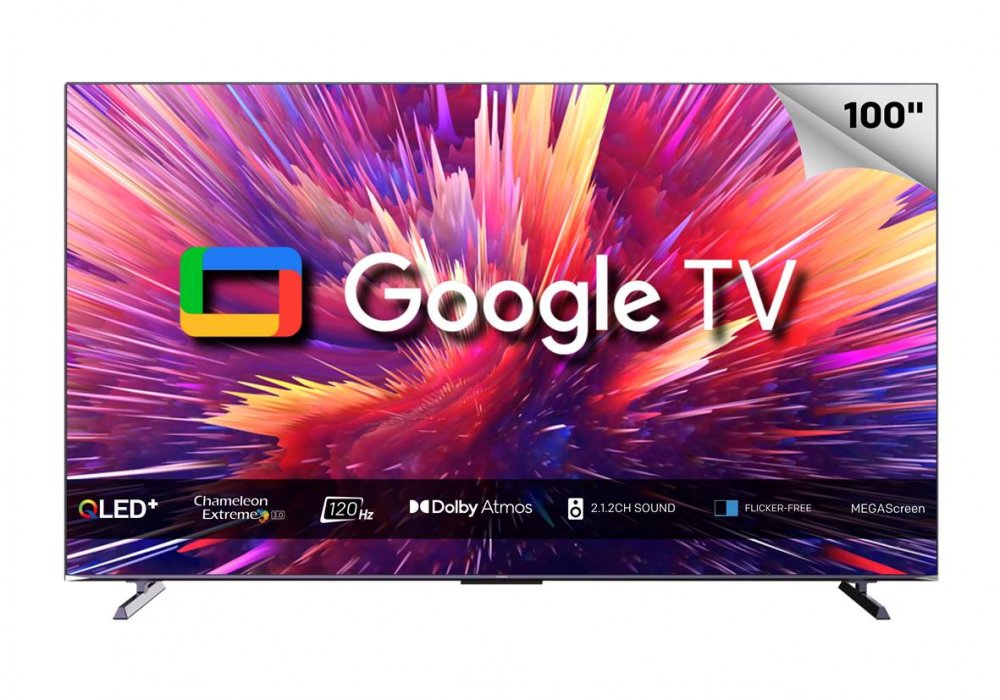
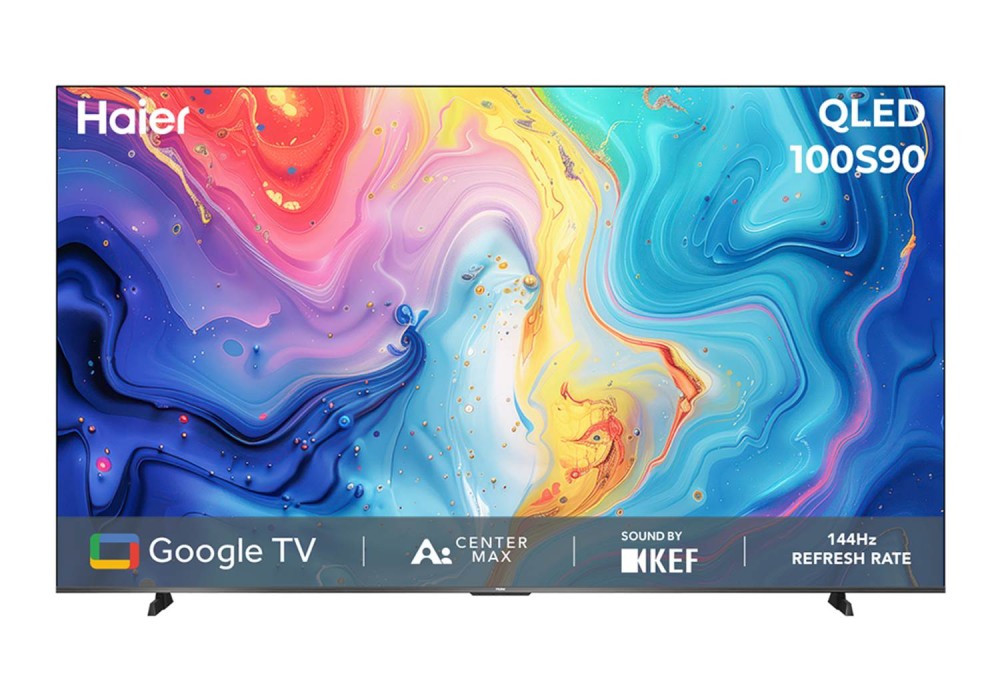
The Skyworth 100SUF958P and Haier H100S90FUX are both massive 100-inch 4K QLED Google TVs designed for premium home entertainment. While they share features like Dolby Atmos, Dolby Vision, MEMC, Chromecast, and Google TV, their strengths differ significantly. Skyworth focuses on immersive audio with its 2.1.2-channel speaker setup and lower power consumption, while Haier pushes ahead with superior brightness, advanced local dimming, faster refresh rates, stronger gaming features, and more powerful smart TV hardware. If you're investing in a large-screen flagship TV, understanding these differences can help you choose the right model for movies, gaming, or everyday viewing.
Verdict
The Haier H100S90FUX is the stronger overall TV for most buyers. Its 144Hz panel, 1000-nit brightness, 432-zone local dimming, HDMI 2.1 ports, AMD FreeSync Premium Pro, and 4GB RAM make it a better choice for gaming and premium HDR viewing. The Skyworth 100SUF958P remains attractive for users who prioritize built-in sound quality thanks to its 2.1.2-channel Dolby Atmos audio system and lower power consumption. For overall performance and future-ready features, Haier takes the lead.
|
| Model No |
100SUF958P |
H100S90FUX |
| TV Type |
Smart TV |
Smart TV |
| Screen Size |
100 Inch (254 cm) |
100 Inch (254 cm) |
| Resolution |
4K 3840 x 2160 |
4K 3840 x 2160 |
| Aspect Ratio |
16:9 |
16:9 |
| Motion Rate |
120 Hz |
144 Hz |
| Viewing Angle |
178°/178° |
178°/178° |
| USB |
| USB Version |
: 2.0 |
| Supported Audio Formats |
: MP3, WMA, WAV |
| Supported Video Formats |
: MPG, MPEG, DAT, VOB, MKV, MP4, MOV, FLV, 3GP |
| Supported Picture Formats |
: JPG, JPEG, BMP, PNG |
|
| USB Version |
: 2.0 |
| Supported Audio Formats |
: AAC, M4A, MP2, MP3, WMA |
| Supported Video Formats |
: 3GP, ASF, AVI, DAT, FLV, MKV, MOV, MP4, MPEG, MPG, VOB |
| Supported Picture Formats |
: JPEG, GIF, PNG |
|
| Video |
| BackLight |
: 4K UHD QLED+ |
| HLG |
: Yes |
| MEMC |
: Yes |
| HDR10 |
: Yes |
| HDR 10+ |
: Yes |
| Dolby Vision |
: Yes |
| Chameleon Extreme 3.0 Engine |
: Yes |
| Response Time |
: 6.5 ms |
| Dynamic Contrast |
: 5000:1 |
| Brightness |
: 400 Nits |
| Local Dimming |
: 112 Zones |
| Colour Gamut |
: 90% NTSC |
|
| Backlight |
: 4K UHD QLED |
| HLG |
: Yes |
| AI-SR |
: Yes |
| 4K HDR |
: Yes |
| HDR10+ |
: Yes |
| AI-Depth |
: Yes |
| AI-Motion |
: Yes |
| Dolby vision IQ |
: Yes |
| AI-Color Boost Pro |
: Yes |
| AI-Scene Detection |
: Yes |
| AI-HDR Enhancer Pro |
: Yes |
| Panel Type |
: D-LED |
| Motion Technology |
: MEMC |
| Brightness |
: 1000 Nits |
| Dynamic Contrast |
: 10000000:1 |
| Local Dimming |
: 432 Dimming Zone |
| Picture Engine |
: AI Ultra Sense Processor |
| Picture Mode |
: User, Dolby Vision , Standard, Vivid, Sport, Movie, Game, Energy Saving |
|
| Audio |
| Audio Output Power ( RMS ) |
: 60 W |
| Dolby Atmos |
: Yes |
| Sound System |
: 2.1.2 Channel |
|
| Audio Power Output ( RMS ) |
: 55 W |
| Dolby Atmos |
: Yes |
| Sound By KEF |
: Yes |
| AI Center MAX |
: Yes |
| Sound Technology |
: Total Sonic, 2.1 CH Speaker |
| Speaker Type |
: 2.1 CH Speaker With Subwoofer |
|
| Connectivity Options |
| HDMI 2.0 |
: 3 ( HDMI 2.1@ HDMI2 & 3 ) ( HDMI 2.0 @HDMI 1 ) |
| USB 2.0 |
: 2 |
| RF Input |
: 1 Yes |
| Ethernet / LAN |
: 1 Yes |
| Composite Input 3.5 mm |
: 1 Yes |
| WiFi Built-In |
: Yes |
| Chromecast Built-In |
: Yes |
| Bluetooth 5.1 Input & Output |
: Yes |
| SPDIF Output |
: 1 Optical |
| Updating Interface |
: USB, Internet |
| WiFi |
: 2.4G+5G, 2T2R |
|
| HDMI ( 2.1 ) |
: 4 |
| USB ( 2.0 ) |
: 3 |
| Bluetooth 5.2 |
: Yes |
| Ethernet / LAN |
: Yes |
| Google Chromecast Built-In |
: Yes |
| Inbuilt WIFI |
: WIFI6 |
| HDMI Audio Return Channel |
: HDMI 2.1 eARC |
| Digital Audio Output |
: Optical SPDIF Out |
| Analog Audio Output |
: 3.5 mm Stereo Headphone Jack |
|
| Smart TV Features |
| Operating System |
: Google TV |
| Netflix |
: Yes |
| Disney+ |
: Yes |
| Youtube |
: Yes |
| DSTV Now |
: Yes |
| SHOWMAX |
: Yes |
| Flicker-Free |
: Yes |
| Prime Video |
: Yes |
| Youtube HDR |
: Yes |
| MEGA Screen |
: Yes |
| Google Assistant |
: Yes |
| Google Play Store |
: Yes |
| Far Field Voice Control |
: Yes |
| RAM DDR |
: 3 GB |
| ROM Flash |
: 32 GB |
|
| Operating System |
: Google TV |
| Android Version |
: Android 14 |
| RAM |
: 4 GB |
| ROM |
: 64 GB |
| Google Play Store |
: Yes |
| One Touch Button |
: Yes |
| Hands Free Voice Control |
: Yes |
| AI Smart Voice By Google Assistant |
: Yes |
| Android Devices IOT Hub |
: HaiSmart |
| Mobile Remote App |
: Google TV Remote App |
|
| Other Features |
| Design |
: Ultra-Slim Boundless Screen |
| EPG |
: Yes |
| Subtitle |
: Yes |
| Child Lock |
: Yes |
| Game Mode |
: Yes |
| Variable Refresh Rate |
: Yes |
| OSD Language |
: English |
| DTV Receiving System |
: DVB-T2 Digital |
|
| Design |
: Slim-Fit Design |
| Colour |
: Black |
| Country of Origin |
: India |
| Warranty |
: 2 Year Warranty : 1 Year Standard Warranty + 1 Year Extended Comprehensive Warranty |
|
| General Details |
| Power Supply ( Voltage, Hz ) |
: AC 100-240V~ 50/60Hz |
| Power Consumption |
: 280 W |
| Power Consumption Standby Mode |
: <0.5 W |
| Net Weight |
: 73.4 Kg |
| Gross Weight |
: 92.4 Kg |
|
| Power Supply ( Voltage, Hz ) |
: AC 176 - 240V 50/60Hz |
| Power Consumption |
: 500 W |
| Power Consumption Standby |
: <0.5 W |
| Energy Saving Mode |
: Yes |
| Unit Weight |
: 50.6 Kg |
| Gross Weight |
: 87.2 Kg |
|
| Supplied Accessories |
| Remote Control IR + BT |
: Yes |
| Stand |
: Yes |
| Wall Mount |
: Yes ( Mount Bracket Not Included ) |
|
| Remote Control |
: Yes |
| AAA Batteries |
: Yes |
| Power Cord |
: Yes |
| User Manual |
: Yes |
|
|
Compare Skyworth 100SUF958P with:
|
Compare Haier H100S90FUX with:
|
|
Frequently Asked Questions
Which product is better for gaming?
The Haier H100S90FUX is better for gaming thanks to its 144Hz refresh rate, AMD FreeSync Premium Pro, VRR, ALLM, and dedicated gaming features.
Does Product 1 support Dolby Atmos?
Yes, the Skyworth 100SUF958P supports Dolby Atmos and includes a 2.1.2-channel speaker system with 60W audio output.
Which TV offers better HDR performance?
The Haier H100S90FUX delivers stronger HDR performance with up to 1000 nits brightness and 432 local dimming zones, compared to 400 nits and 112 zones on the Skyworth.
Which TV has better built-in storage?
The Haier H100S90FUX offers 64GB storage and 4GB RAM, while the Skyworth 100SUF958P includes 32GB storage and 3GB RAM.
Which TV is better for movie watching?
The Haier H100S90FUX provides superior contrast, brightness, and local dimming for cinematic viewing, while the Skyworth offers slightly stronger built-in audio.
Which TV has more HDMI connectivity?
The Haier H100S90FUX includes four HDMI 2.1 ports, giving it an advantage over the Skyworth's three HDMI ports.
Top Differences- Refresh Rate: 120 Hz Vs 144 Hz
- Local Dimming: 112 Zones Vs 432 Dimming Zone
|
|
 ALERT
ALERT